
Bare Trust Reporting in Canada

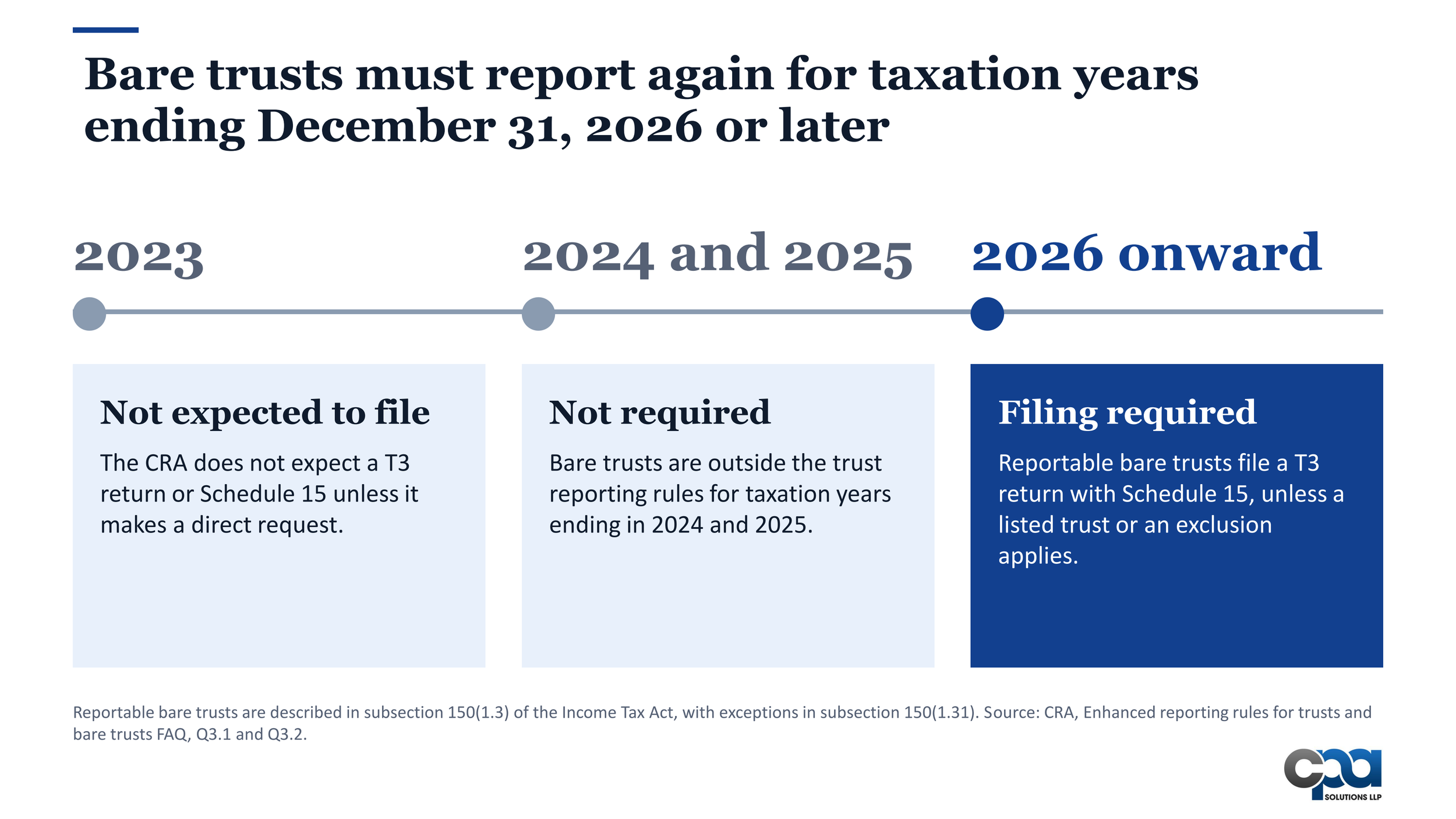
Bare trusts will begin filing reporting returns in 2026: although they were exempt for the 2024 and 2025 tax years, reportable bare trusts must file for taxation years ending on or after December 31, 2026. Whether a particular arrangement has to file comes down to three tests: whether it is in fact a bare trust, whether any exclusion applies, and whether it qualifies as a listed trust. In practice, most small family arrangements will not need to file, since the listed-trust thresholds are $50,000, or $250,000 where simple assets are held among related individuals. Trusts that do have to file must submit Schedule 15 along with a short T3 return, and late or incomplete filings are subject to a penalty of $25 per day, with a minimum of $100 and a maximum of $2,500.
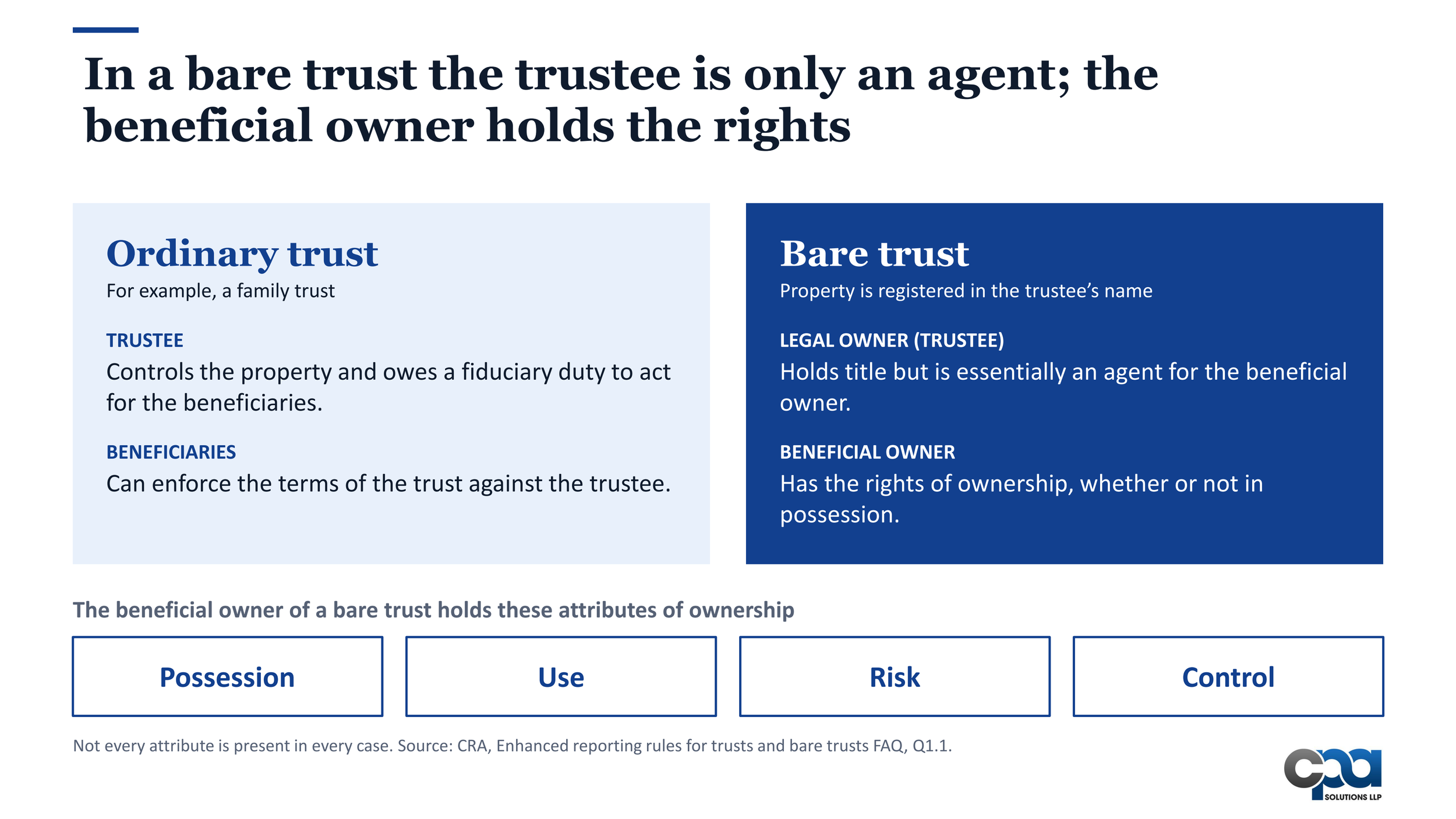
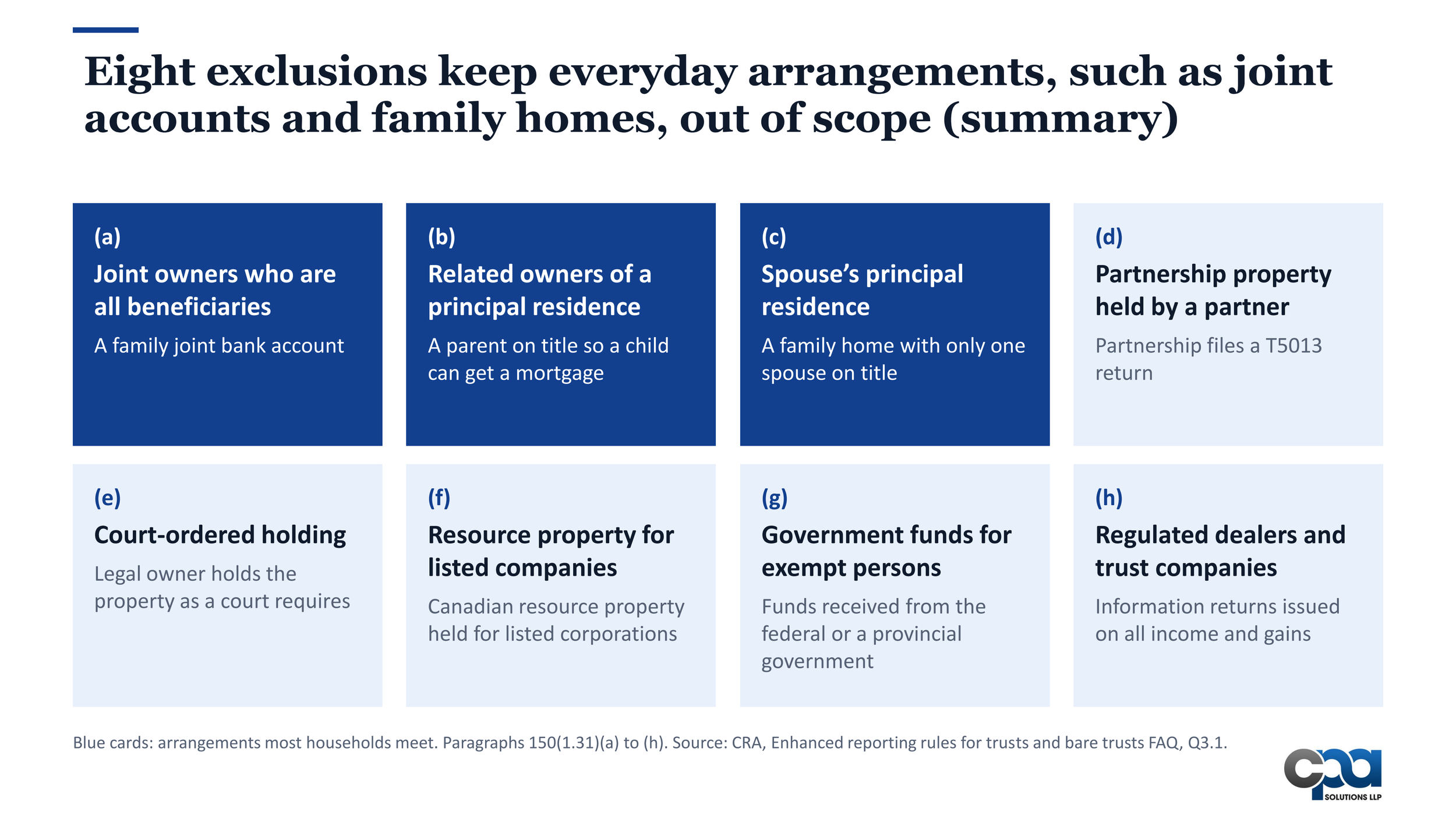
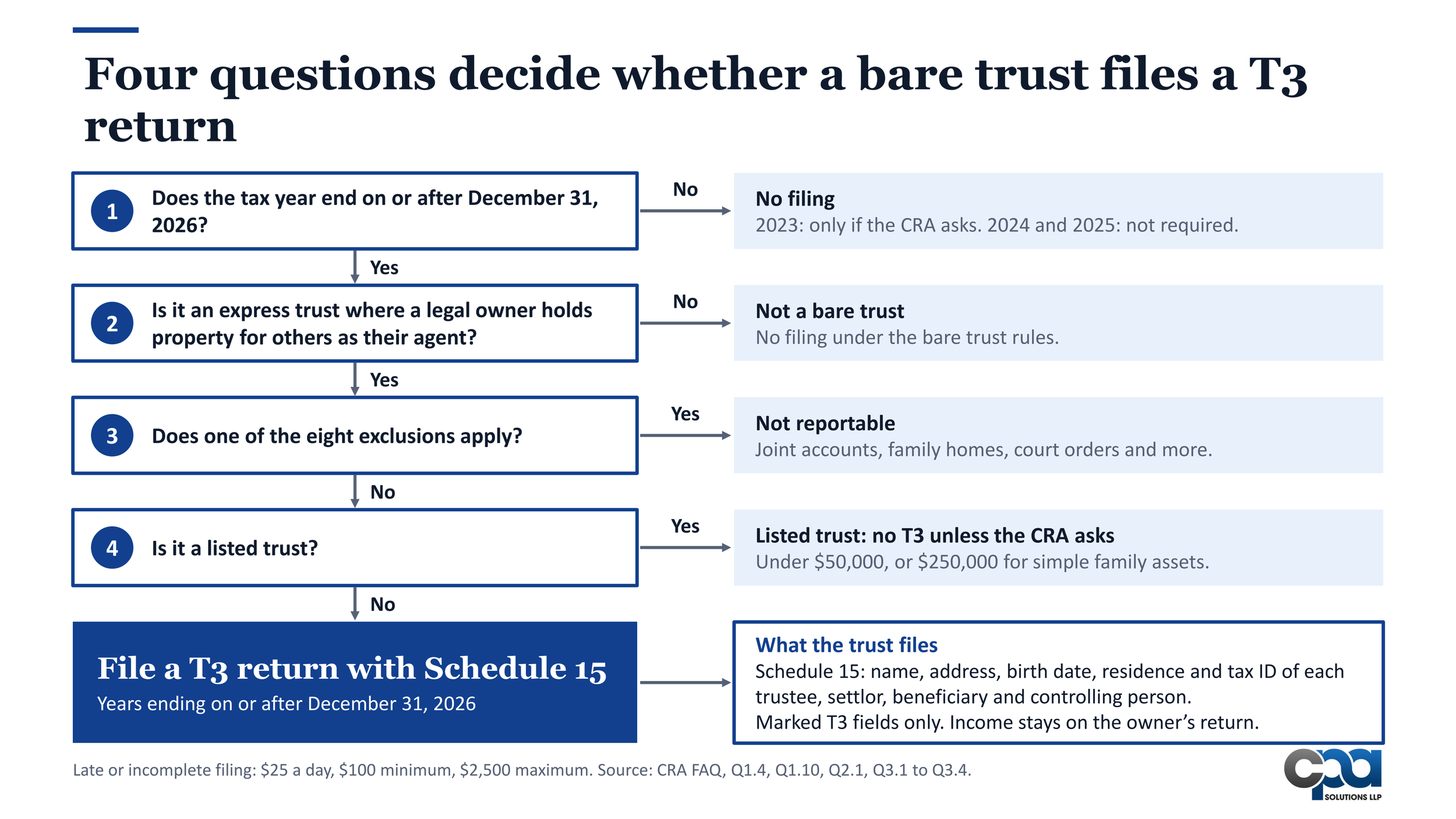
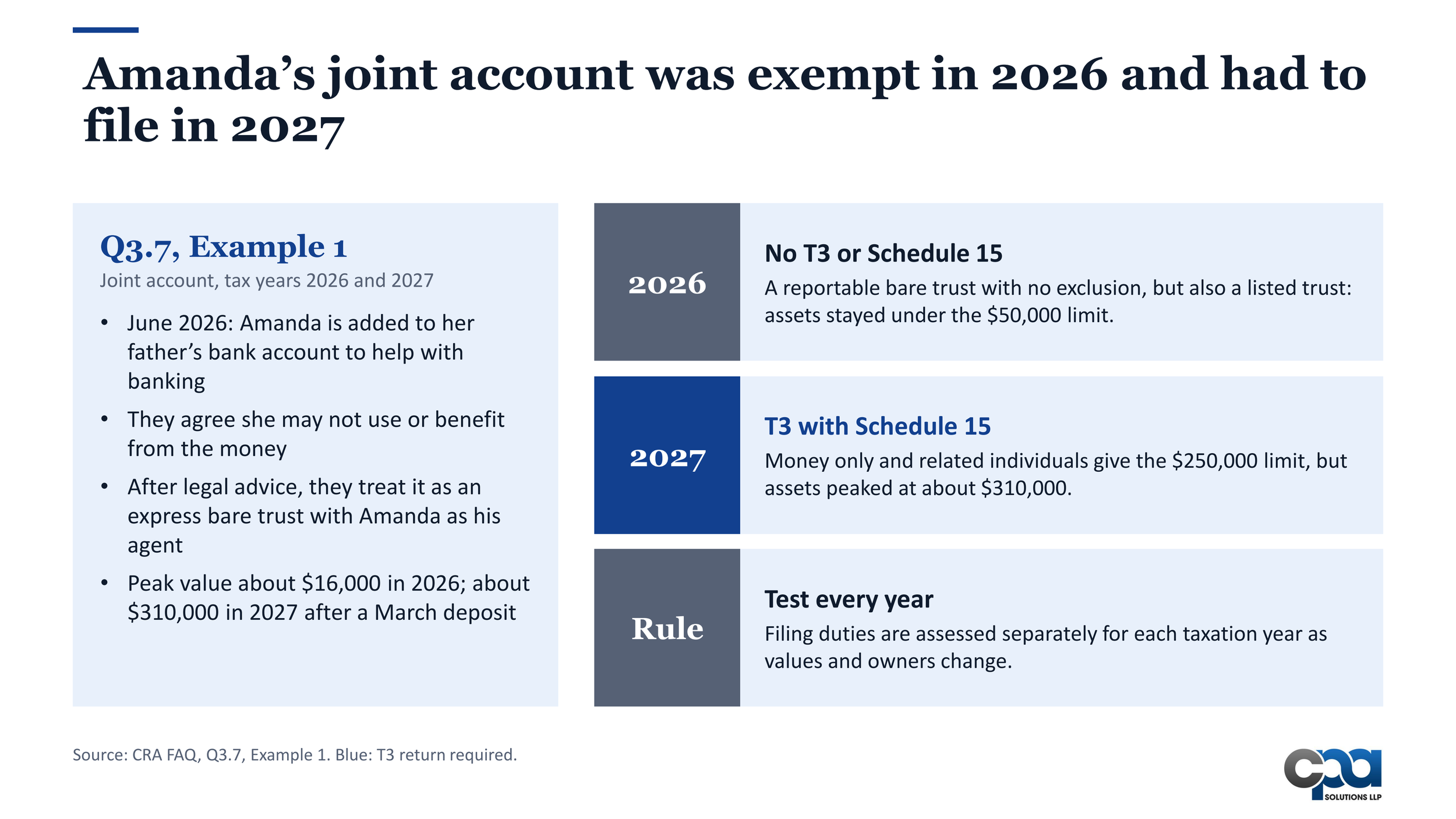
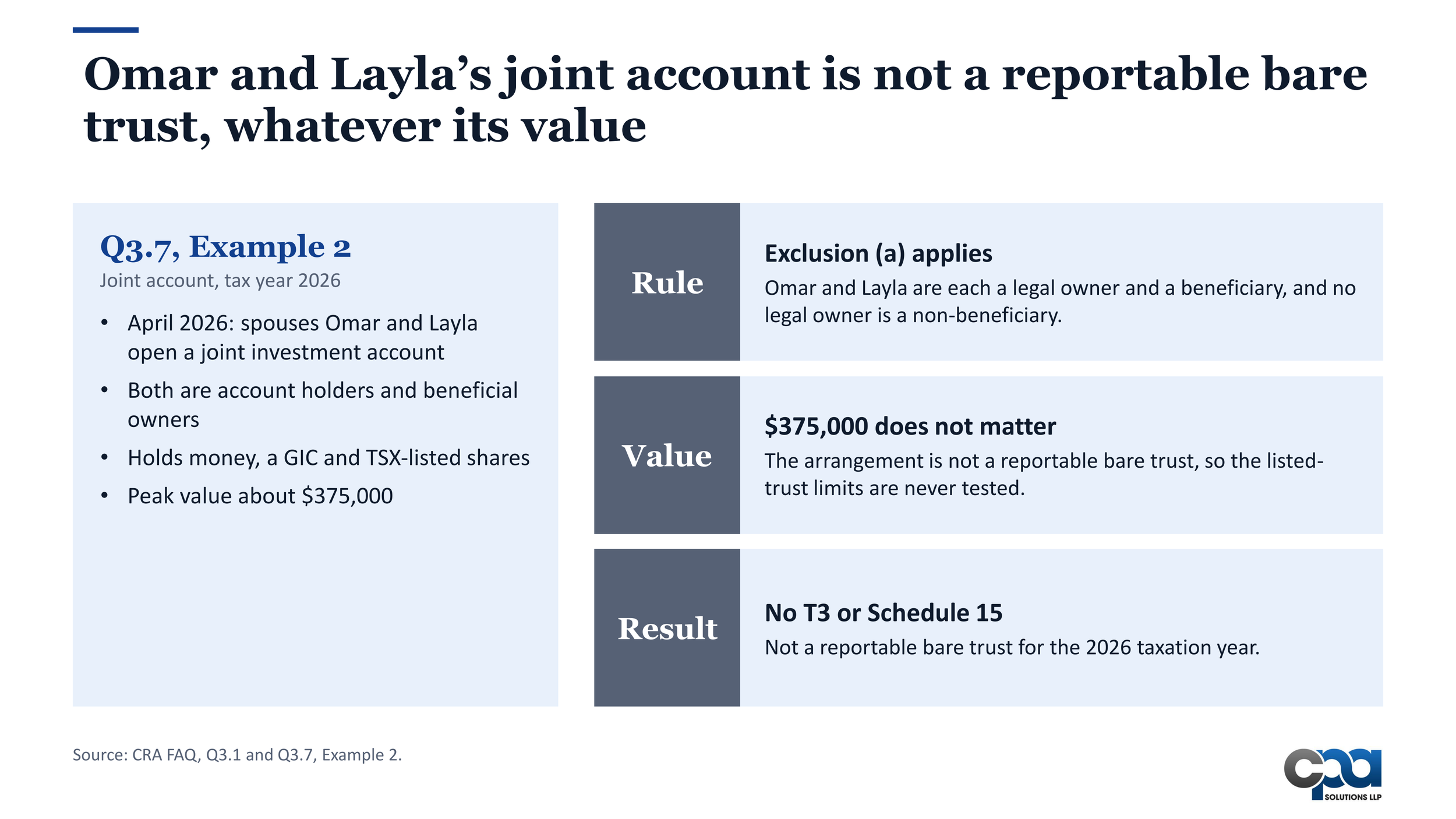
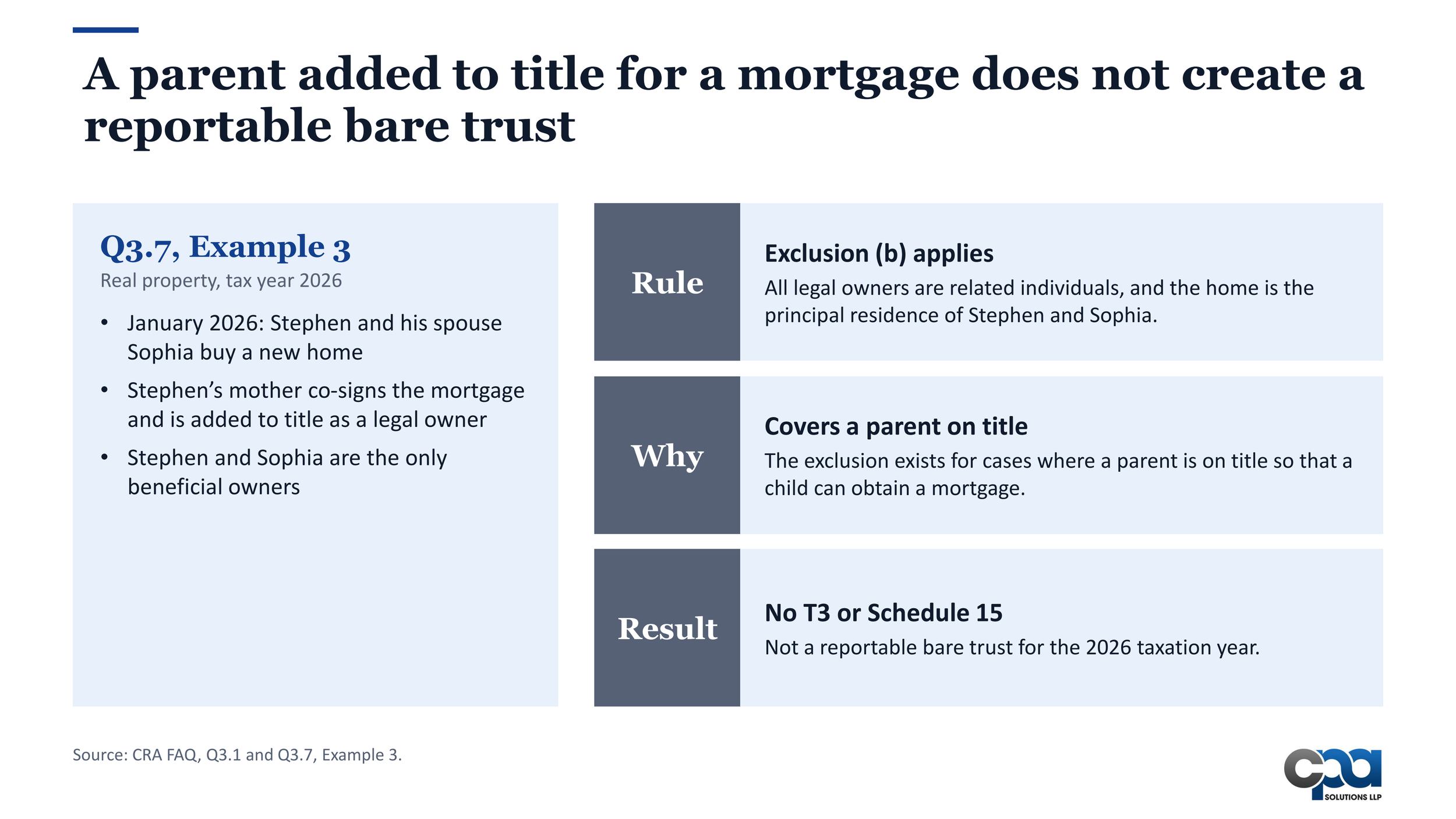
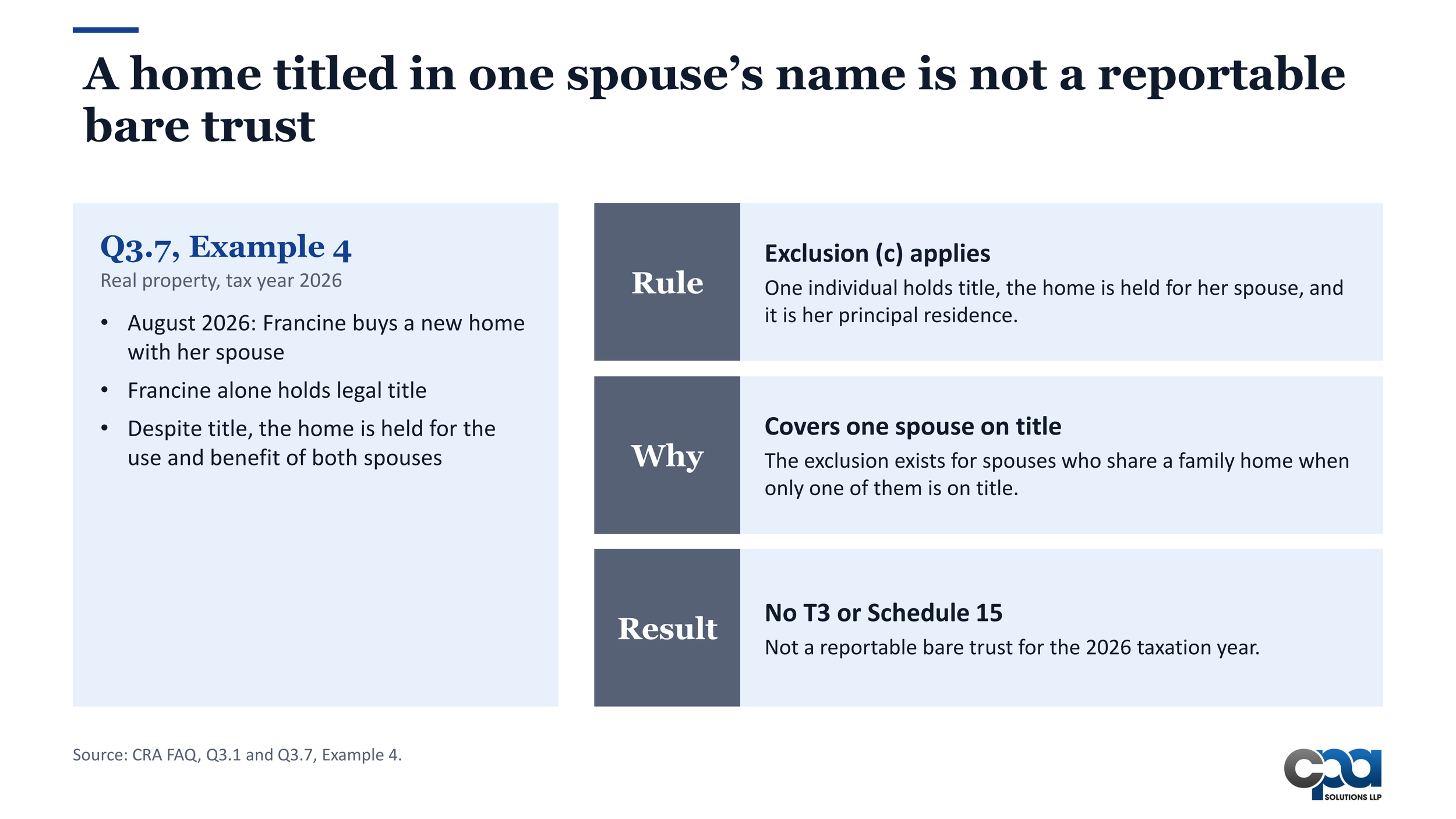
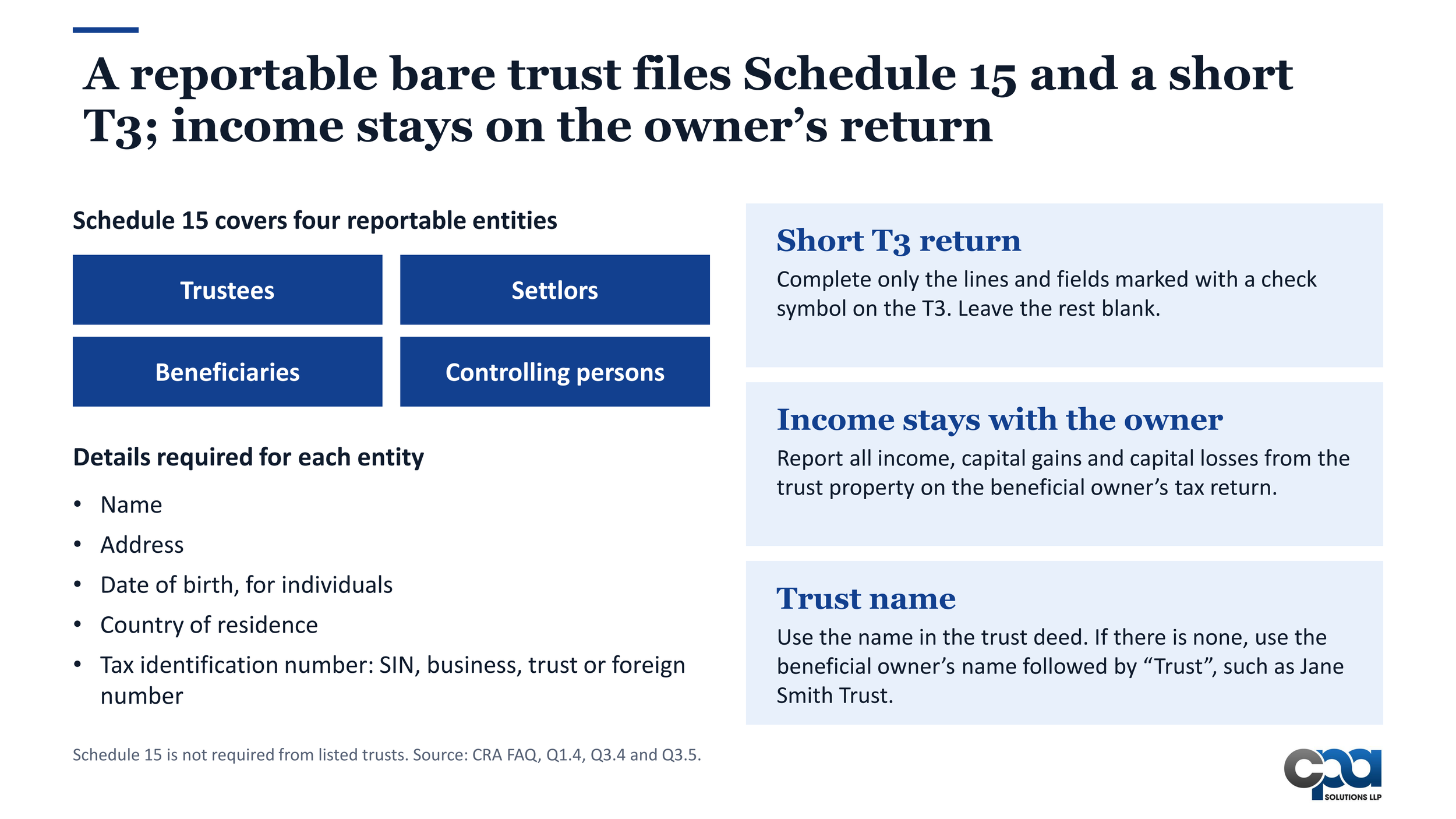
First, identify every arrangement in which a legal owner holds property for someone else, including joint accounts and property held for family members. For each arrangement, apply the three tests (bare trust, exclusion, and listed trust) every year, because filing obligations can change from one year to the next. Also track the highest fair market value of the trust’s assets during the year and compare it against the $50,000 and $250,000 limits. Because Schedule 15 requires the name, address, date of birth, residence, and tax identification number of each trustee, settlor, beneficiary, and controlling person, gather these details early. Finally, seek legal advice to confirm whether a bare trust arrangement exists.
This presentation summarizes the CRA’s guidance on bare trust reporting, and readers should review the full CRA publication for a complete understanding of the rules and how they apply to their own situation.